Building a personal portfolio website is a rite of passage for software engineers. While off-the-shelf templates offer speed, crafting a custom full-stack platform provides complete architectural freedom, optimized performance, and a playground for modern web standards.
The Engineering Stack
To combine backend performance with a smooth content workflow, I chose a modern PHP and JavaScript architecture:
Backend Engine: Laravel providing REST APIs, custom middleware, and authentication.
Frontend UI: Interactive components built with React and styled for clean responsiveness across mobile and desktop devices.
Database & Deployment: PostgreSQL deployed inside containerized environments on Render with dynamic
sitemap.xmlfeeds.
Data Integrity with Form Requests
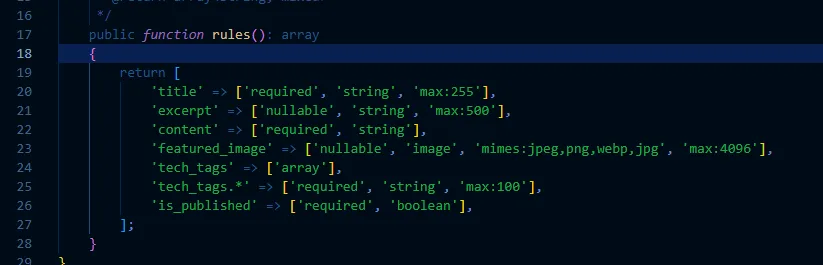
When publishing technical write-ups and case studies, maintaining clean data on the server is critical. Instead of bloating controller methods, I utilize dedicated Laravel FormRequest validation rules to enforce file constraints, publication status, and dynamic technology tags:
Highlights of This Setup
Array Validation for Tech Tags: Using
tech_tags.*guarantees that every tech tag sent from the React UI frontend is a sanitized string up to 100 characters.Image Upload Handling: Limits media uploads strictly to
jpeg,png,webp, andjpgunder 4 MB to optimize CDN bandwidth and prevent unexpected formats.Flexible Draft Status: The boolean
is_publishedkey allows toggling between work-in-progress drafts and live public posts seamlessly.
Stay tuned for future technical posts where I cover XML sitemap caching, CI/CD automated deployments, and API integrations!